

How a Magazine Becomes a Lifestyle Brand
Business of Fashion (2026)
Kinfolk, the quintessential Millennial lifestyle quarterly, is betting it can translate its aspirational aesthetics into a multicategory consumer brand — starting with a beauty line and a new Manhattan pop-up.
By BRENNAN KILBANE
KEY INSIGHTS
- The magazine Kinfolk has expanded into a fragrance concept, Kinfolk Notes, and skincare collection, Kinfolk Essentials, translating its aspirational editorial into beauty lines.
- This strategy mirrors a broader industry trend where media brands increasingly leverage their curation expertise to build e-commerce sections and physical retail spaces, as print’s traditional revenue streams dry up.
- Magazines like Monocle have proven successful at translating its editorial perspective into product ranges and retail spaces, but the strategy risks alienating a title’s hard-won core audience.
Since its founding in 2011, the publication Kinfolk has been a record of the quintessential Millennial lifestyle, in which creaseless cotton poplin, pale oak furniture and carefully arranged slices of sourdough signified a life well lived.
The magazine’s next chapter is a surprising one: In 2022, Kinfolk launched a fragrance line, Kinfolk Notes, betting that the aspirational aesthetic it cultivated in print can succeed as a multicategory consumer brand. This week, it opened its first US pop-up shop in Lower Manhattan, with plans to expand into adjacent beauty categories.
“I want to keep [the magazine] as the Bible, or the catalogue of lifestyle, leveraging the content to create products and cadences across different categories,” said Chul-Joon Park, the publisher and chief executive of Kinfolk and the founder of Kinfolk Notes.

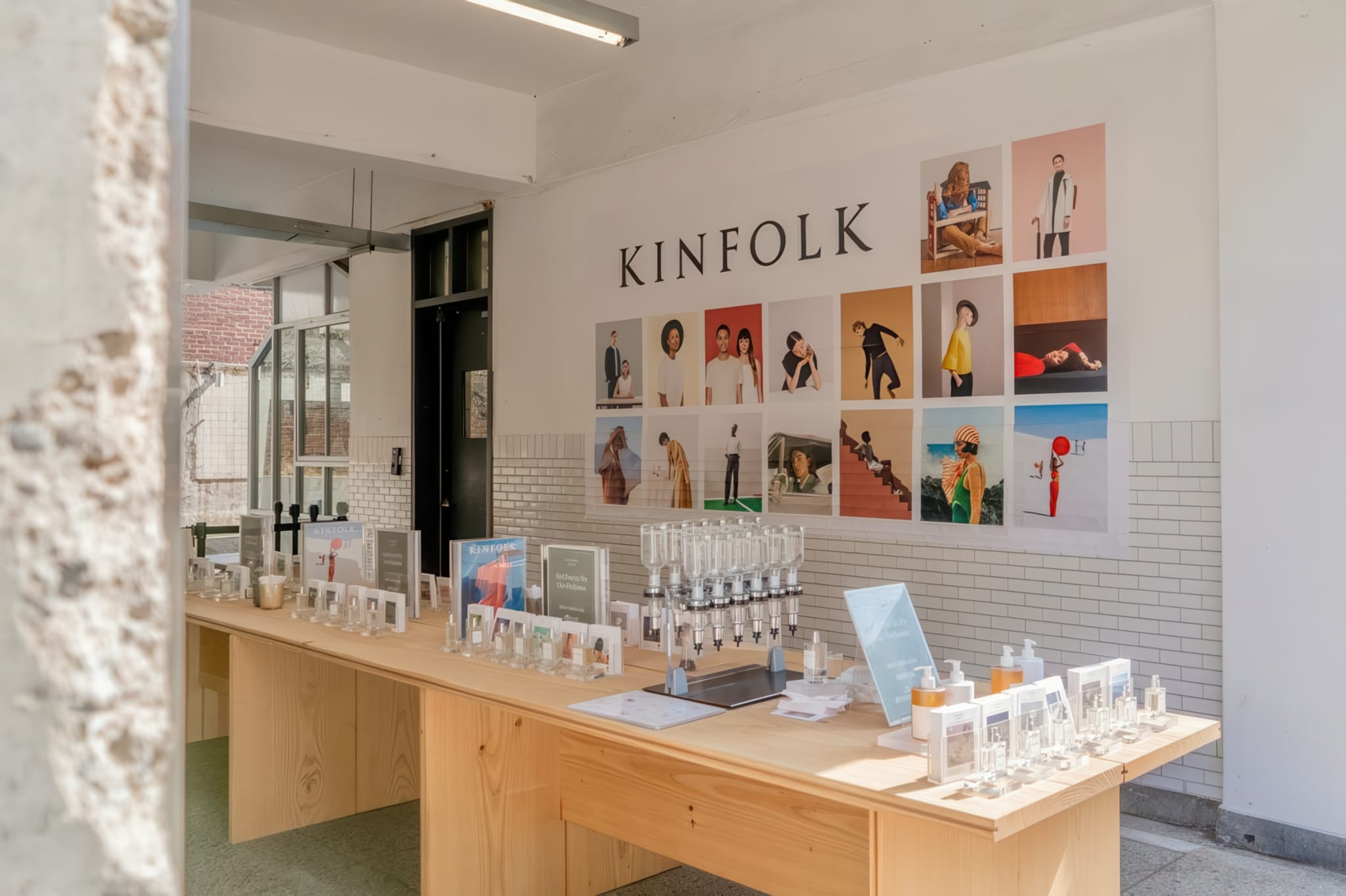
Kinfolk Notes' campaigns are produced by the magazine's editorial team. The title is "fiercely independent" from its consumer business, editor-in-chief John Burns said. (Kinfolk)
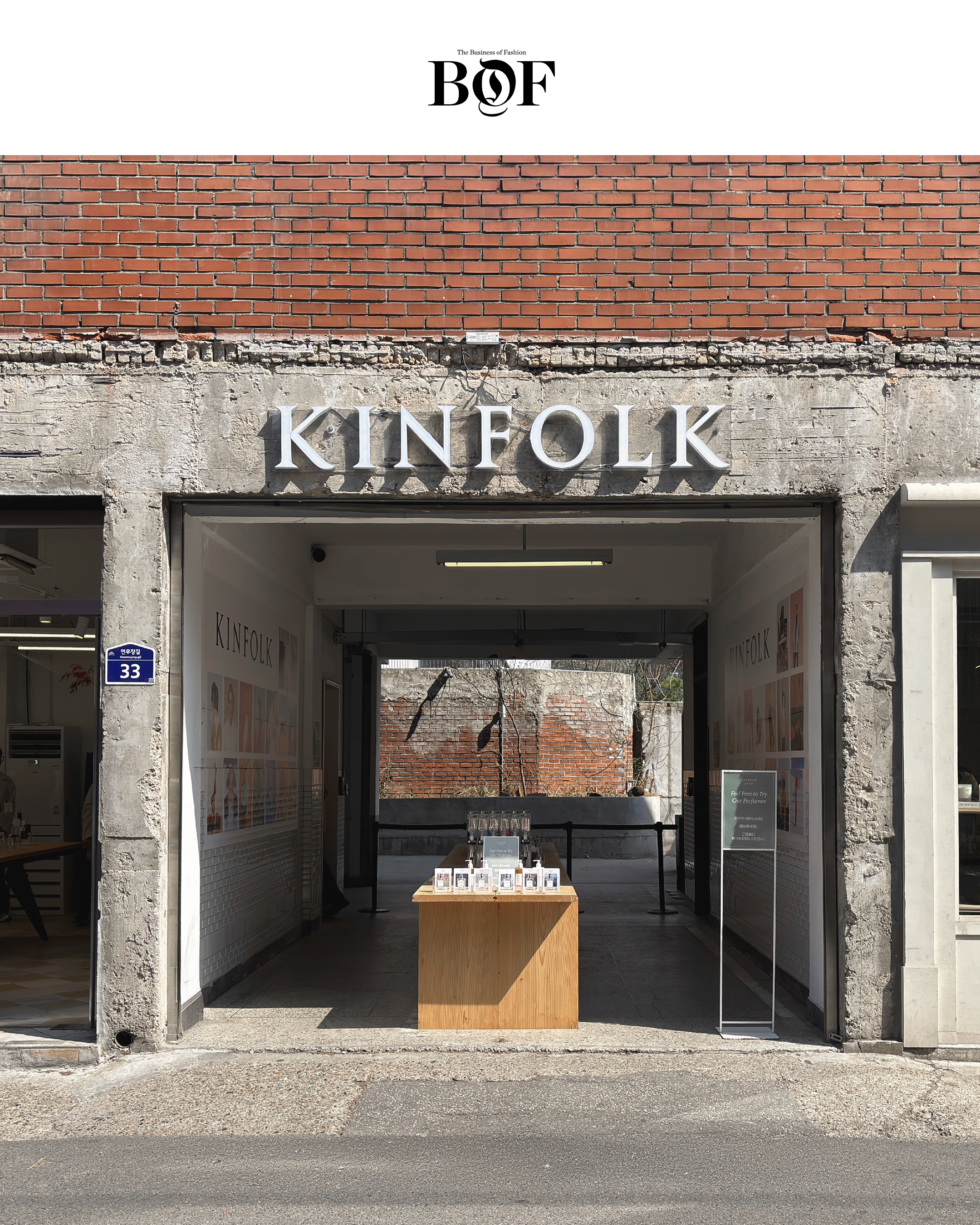
The fragrance collection includes perfumes, body care products and home fragrance; a skincare line, Kinfolk Essentials, launched in May. All formulas are made in Korea, where Kinfolk operates two Seoul boutiques. The line can also be found in Arket stores in the UK and EU.
Kinfolk’s venture into beauty follows other titles in media that have looked to commerce as a way to bolster revenue amid disruption by social media and shifting consumer habits. Publishers like The New York Times and Condé Nast have built entire shopping verticals, monetising product recommendations via affiliate links. Others, like Goop, Allure or Monocle, have launched their own lines and immersive retail spaces.
Content-to-commerce can be a bankable expansion strategy, but it’s a risky one. Talent and resources are diverted from editorial prowess into product sales. A turn toward peddling products can also end up eroding a publication’s credibility. Glamour, once the cash cow of Condé Nast with a giant advertising business and flagship Women of the Year event, has become a content farm pushing out an endless torrent of shoppable reviews.
But a product line can also be an opportunity to garner a wider audience, not to mention a more profitable revenue stream. With a modest circulation of about 75,000 print subscribers worldwide, Kinfolk is hardly the cultural juggernaut its outsized influence might suggest. Its fragrance line has the potential to expand into a full assortment of lifestyle products. Park said the company plans to launch Kinfolk Wellness, with supplements, in the fourth quarter of 2026.
A successful product brand travels further than a quarterly magazine, reaching shoppers who could potentially become readers too.
“As print wanes, how can you create that best version of the [magazine experience]?” said Amy Keller Laird, senior vice president of global beauty and wellness at Karla Otto, and former editor-in-chief of Women’s Health. “You bring it back to the real world.”

Kinfolk Notes' skincare range will launch in the fall. (Kinfolk)
From content to product
From Buzzfeed’s play for packaged food products to Allure’s temporary Soho store, there are plenty of examples of how a media publication can struggle when it comes to a commercial extension. On the other hand, Glossier successfully demonstrates how a product empire can be sprung from an editorial project, despite its recent troubles in scaling.
For Kinfolk, the most relevant case study may be Monocle magazine, which published its debut issue in 2007 and began opening branded stores the following year. A 2014 investment from Japanese media company Nikkei helped open the door for further expansion and collaborations with luggage company Porter Yoshida and Comme des Garçons Parfums.
Monocle’s product lines now contribute about a fourth of revenue, according to founder Tyler Brûlé. In addition to Monocle magazines and merch, its seven stores also stock German stationary, Brazilian sandals and skincare travel sets from third-party brands like Horace and Claus Porto. Many of these stores contain cafés.
“The retail and cafés are our fastest growing businesses. Are they the most profitable? And is it the biggest share of the pie? Absolutely not. [That] is still the core magazine,” Brûlé said.

Kinfolk's 60th issue, a 'History Special', was published in June. (Kinfolk)
With its perfume line, Kinfolk has the potential to follow a similar trajectory, complete with a retail footprint, a curated assortment of products and potentially its own food and beverage concept.
For now, the beauty business has shown promise. Kinfolk Notes’ flagship boutique in Seoul’s Seongsu district generates around $15,000 a day, Park said, and the fragrance line became profitable within two years of its launch.
Kinfolk’s product team is based in Seoul, near its flagship and manufacturing. The magazine’s editorial operations remain in Copenhagen, where they moved from the US’s Pacific Northwest in 2015. Kinfolk’s creative team supports the brand by shooting its campaigns, resulting in its glossy, editorial-quality branding; but otherwise there is little operational crossover between the two businesses. The magazine is still “fiercely independent,” said Kinfolk editor-in-chief John Burns.
For both sides of the business to thrive, the voice of the publication must come first. Earlier this month, Kinfolk published its 60th issue, a “History Special” featuring an interview with the British Museum director and a cover fashion spread emphasising quiet-luxury basics.
“At its core, Kinfolk has always been interested in the relationship between behaviour and lifestyle,” Burns said.

 INSTAGRAM